TRINITERRA

OUR ROOTS

Heaven.
Earth.
Human.

Heaven is time. Earth is place. Human is the life between them. Your timing. Your surroundings. The way you live inside them.

CORRESPONDENCE

As above, so below.

The Hermetic phrase “as above, so below” asks how a larger pattern appears at a smaller scale.

Chinese cosmology brings Heaven, Earth and Human together in its own way: time passes, places hold their shape, people act within both.

Bring it down to one room. Who gets to rest? Who stays alert? What keeps happening, even after everyone promises to change?

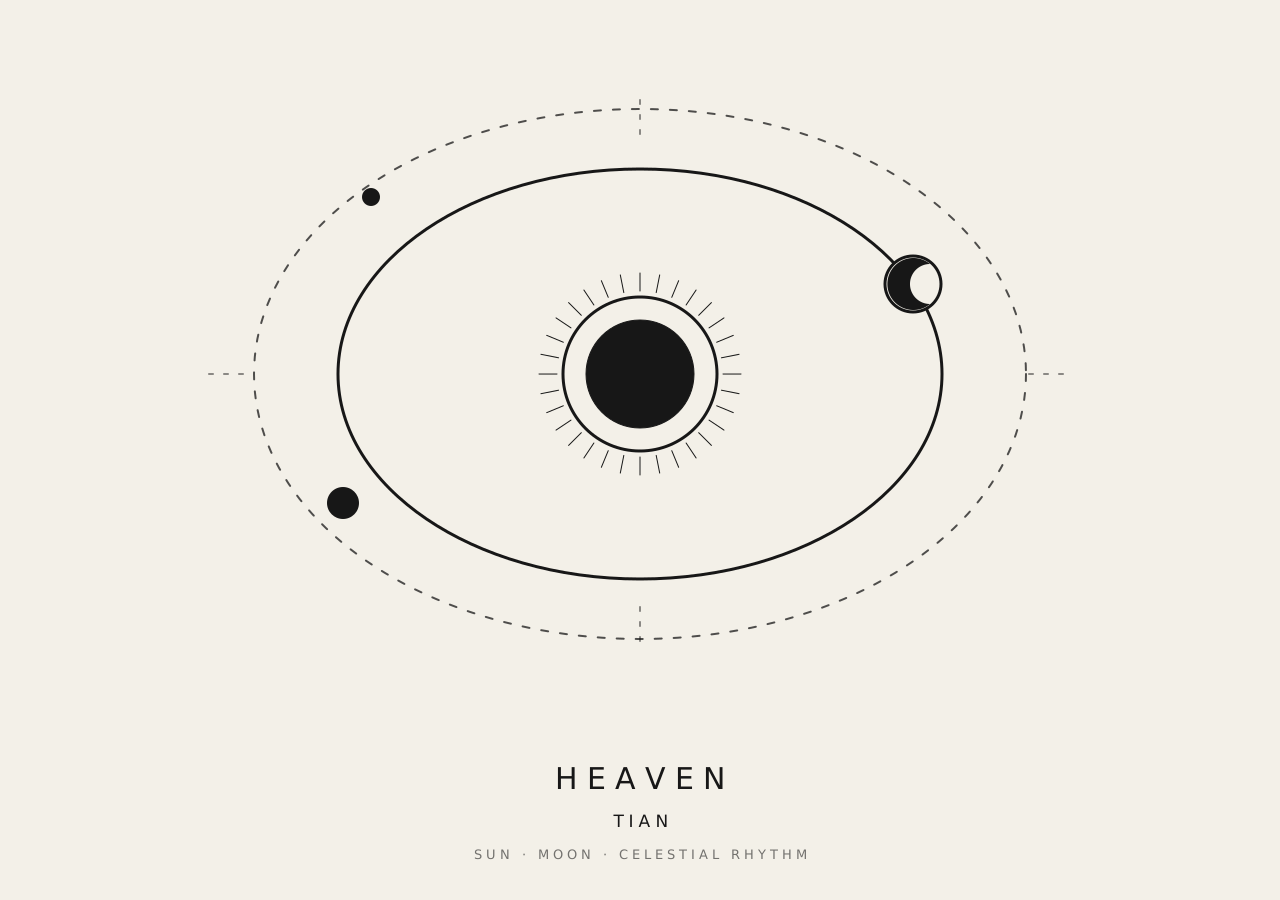
Sun and moon on clear celestial paths representing Heaven and timing

01 / HEAVEN

Heaven

Why does this moment feel different?

You cannot return to the moment you were born. BaZi records it in a traditional calendar and reads the passing periods against it.

Your birth chart stays the same while the seasons outside your window keep changing.

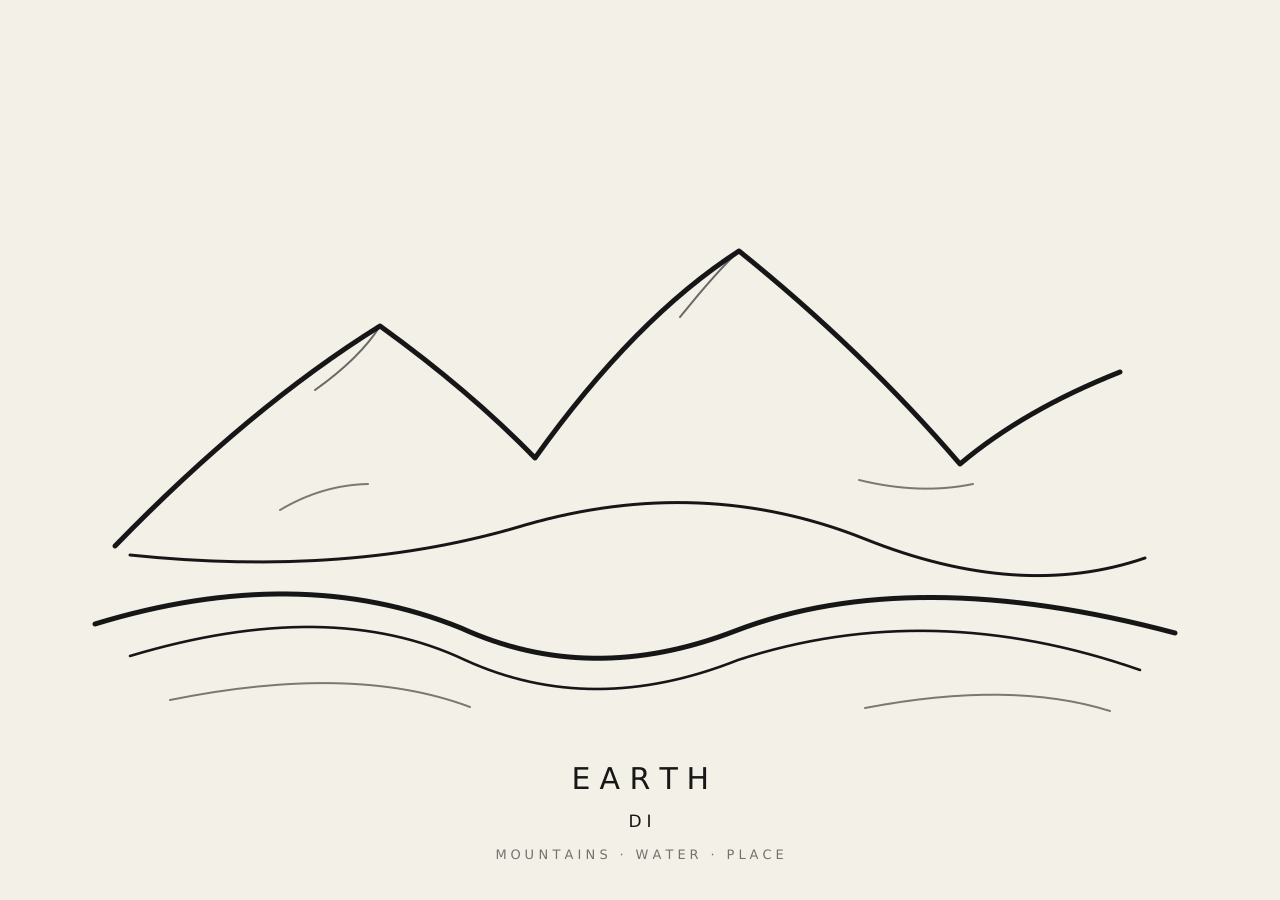
Simple black ink mountains and winding water representing Earth

02 / EARTH

Earth

What does this place keep bringing out?

The hill behind the house. The road at the window. Light on the desk. A door that opens into movement.

Feng Shui reads the relationship between those conditions and the life occupying them.

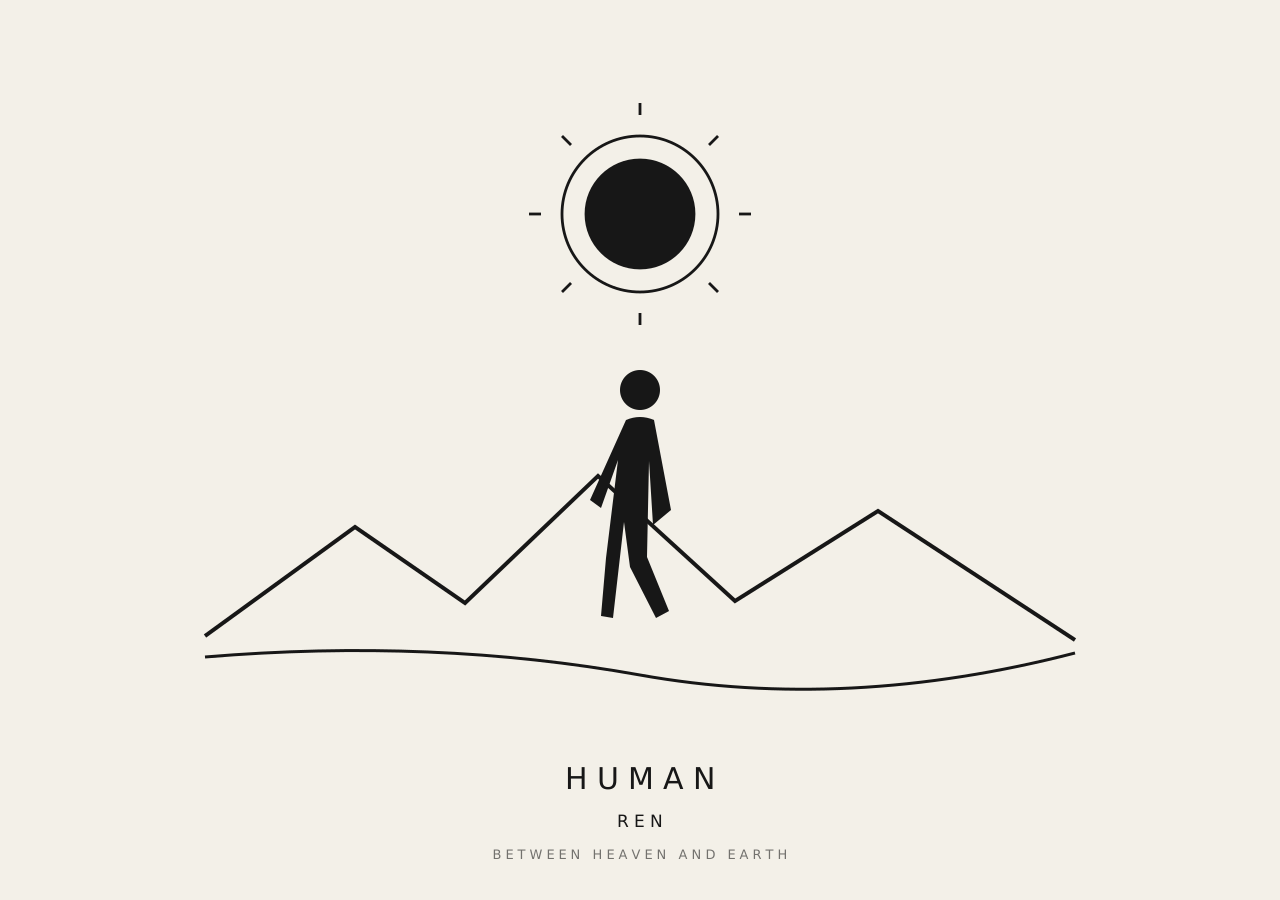
Human between a sun above and mountains below with open space

03 / HUMAN

Human

Who do you get to be here?

You work late at the table. You keep the bedroom door open. Small choices become the way a home is lived in.

The same address can hold someone who needs quiet and someone who needs company. Both have to live here.

Architectural threshold between two paths representing agency and intentional change

04 / WHAT CAN CHANGE

What is still within reach?

First destiny. Then timing. Then Feng Shui.

The birth moment is fixed. The bed, the desk and the route through the room are within reach.

You may have stopped noticing the path behind your chair. The interruption is still there.

Start with one thing you keep working around. Give the change a place and a reason.

The traditional reading offers an interpretation. Living with the change is how you see what follows.

Read the method ↗

The ideas in a home.

What do I bring into a room?Heaven / Earth / Human

Heaven is time. Earth is place. Human is the person living with both.

A night shift ends in the same bedroom where someone else's morning begins. One address, two experiences.

The reading brings time, place and the resident together. Each part still needs its own evidence.

Why does this room put me on edge?Feng Shui

The desk you keep avoiding. The bedroom you never quite rest in. Feng Shui looks at how a place meets the life inside it.

A family route crosses the desk every evening. The interruption has an address.

Start with what can be seen in the room. A traditional interpretation needs its own reasons.

Why do we need different things from the same room?BaZi / Four Pillars

You bring a birth moment into every room you enter. BaZi gives that moment four pairs of characters: year, month, day and hour, when known.

Two people share a bedroom. One wants to retreat; the other is still carrying the day. Their charts and routines are read separately.

Each person chooses whether to take part. Paying for a household reading never opens someone else's birth data.

Why does the same home feel different this year?Xuan Kong

The room stays. The timing changes. Xuan Kong reads a building's direction and period alongside the passing years and months.

The same bedroom appears in a yearly reading and a monthly one. Each asks a question about a different stretch of time.

The building period and facing must be confirmed first. Without them, the house chart remains unfinished.

Explore the tradition +

Heaven, Earth and Human

The three-part reading on this page is Triniterra’s way of organizing its roots. Chinese traditions contain many schools and interpretations.

Stanford Encyclopedia of Philosophy — Correlative Cosmology ↗

“First destiny, second timing, third Feng Shui” is presented as a traditional saying, without attributing it to a named ancient author.

How Feng Shui Works · Methods & sources +

A SHORT INTRODUCTION

How Feng Shui Works

Making room for qi.

Feng Shui considers how a home sits in its surroundings, how its spaces connect and how people live within them. Qi is its traditional language for that flow.

A little more about the methods

Form looks at surroundings and spatial relationships. Xuan Kong Flying Stars uses a separate framework for a building and timing. BaZi is a personal birth-chart tradition. Triniterra keeps their inputs and explanations distinct before considering a household plan.

Missing directions, building history or birth details pause the parts that need them. They do not become guessed facts.

Nine-Palace Flying Stars · Methods & sources +

NINE-PALACE FLYING STARS

One small square. A world of meaning.

The Lo Shu is a 3 × 3 magic square. Its rows, columns and diagonals each total 15.

Flying Star Feng Shui uses the nine-palace framework to read patterns of direction and time.

Across civilizations, magic squares became more than numerical puzzles. They appeared in Chinese cosmology, Islamic esoteric traditions, Jewish mystical texts and Renaissance European magic as ways of expressing order, correspondence and the structure of the cosmos.

In Feng Shui, the Lo Shu provides the nine-space pattern behind the Nine Palaces and the changing patterns used in Flying Star practice.

Different traditions, different meanings — but a surprisingly persistent idea: number can be a map of a larger order.

BaZi — Your Chinese birth chart · Methods & sources +

A SHORT INTRODUCTION

BaZi — Your Chinese birth chart

A language for personal rhythm.

BaZi uses birth details to describe a personal pattern through the five elements. It offers a traditional perspective, separately from your home—not a promise about your future.

Four Pillars input guide +

BAZI / FOUR PILLARS

Year
Month
Day
Hour

Birth date · Birth time
Birthplace & clock context

WoodFireEarthMetalWater
Input guide · No chart calculated

You’re part of the bigger picture. In Chinese correlative cosmology, people, seasons and the natural world were understood through relationships and patterns of change. BaZi offers a traditional personal perspective within that wider view.

Your birth year, month, day and time are expressed in four paired columns, often called the Four Pillars. They provide the starting point for a traditional personal interpretation.

In a household reading, each person keeps their own chart. Moving house changes the setting, not your original birth details.

What do the elements and Day Master mean?

Wood, Fire, Earth, Metal and Water are symbolic categories in this tradition. The Day Master is the heavenly stem of the day pillar, used as a reference in interpretation. Reading the relationships takes more than counting which element is missing.

A color can be a design choice or a traditional symbol. It does not rewrite a birth chart, prove the material of a piece of furniture or guarantee a life outcome. Triniterra does not use these readings to rank people or diagnose illness.

What if I don’t know my birth time?

Leave it blank. We do not invent an hour pillar. Time-dependent parts wait for the missing detail and a verified clock method. Birthplace remains separate from where you live.

A question. A cast. A different perspective.

Ask Your Home uses six randomly generated lines for a short I Ching reading. It is a symbolic prompt, separate from reading your actual home or birth chart.

I Ching method / Sources

We simulate three fair coins for each line, using your browser’s secure random source. Each coin is worth 2 or 3. Six throws are stored from bottom to top. Moving yin (6) becomes yang; moving yang (9) becomes yin. Stable lines (7 and 8) stay as they are.

The six-line figure is matched to the King Wen sequence by its upper and lower trigrams. Binary counting is not used as the hexagram number. The names are short English reading labels, not quotations.

Our home-check prompts are authored modern interpretations, all marked draft and awaiting review. The current basic symbolic reading does not calculate Na Jia, six relations, host/responding lines or month/day dependencies. It does not interpret changing-line verses or claim full Liu Yao analysis.

Try the free symbolic reading ↗

Imagined editorial scenes, separate from the fictional sample home and any measured reading.